
At first, there were the Yellow Pages …
Before I joined the company in 2000, ZF in Singapore did not have a marketing function to take care of the advertising needs of the company. The finance department of the company did its best to advertise the company and its brands by taking up a few advertisements in the printed Yellow Pages and other industrial directories. This was also in response to door-knocking sales persons selling media advertising spaces.
You have to keep in mind that this was an era before internet advertisements became popular and social media channels were still not invented yet or were still in their early stages of infancy. In addition the automotive aftermarket industry in South East Asia was quite traditional and old-fashioned in its business and marketing ways at that time.
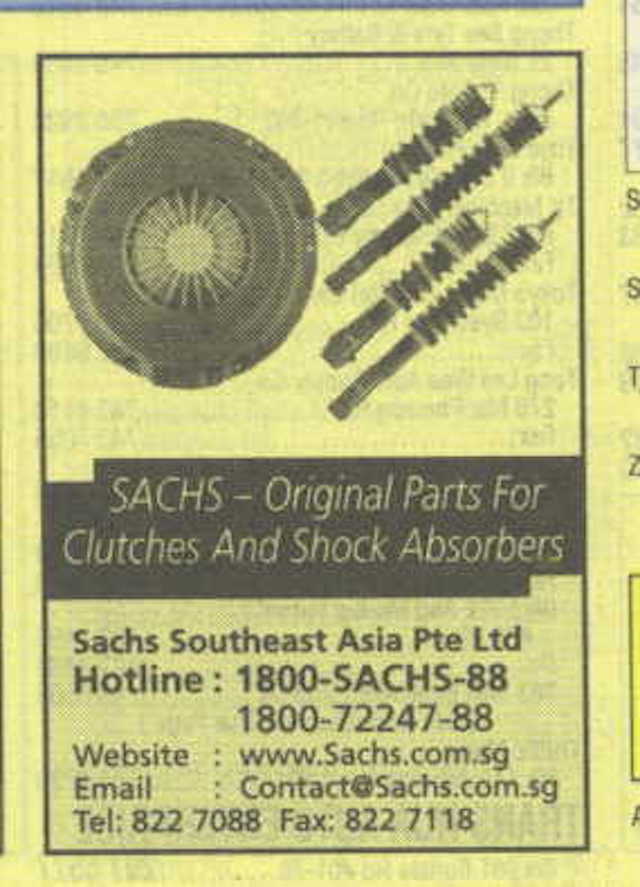
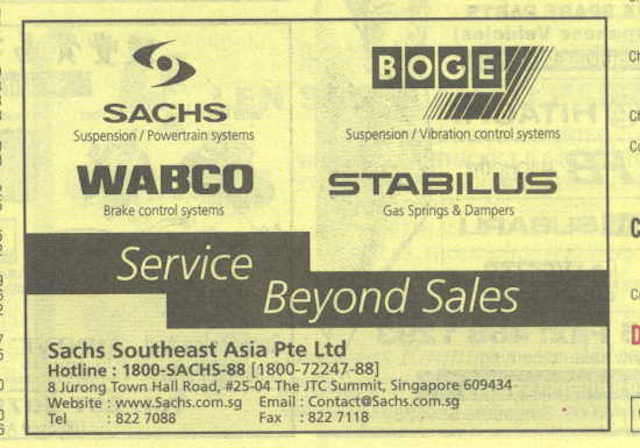
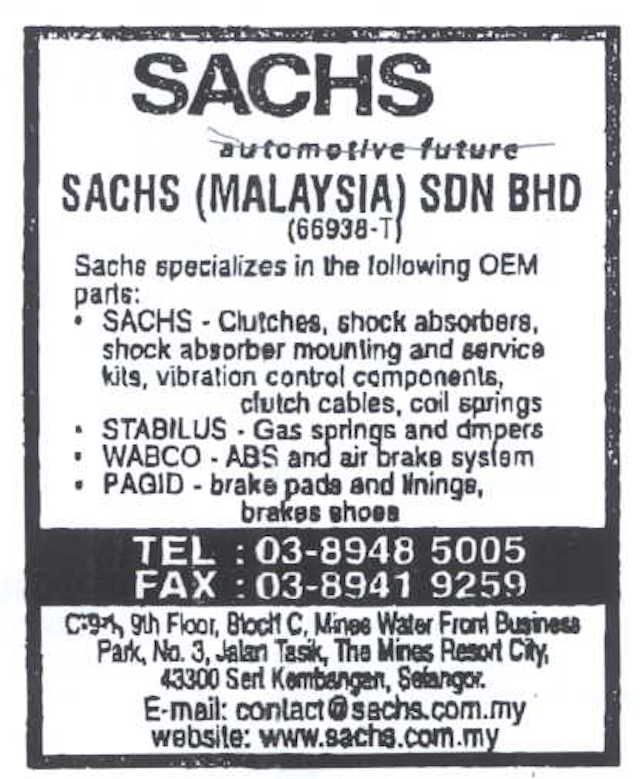
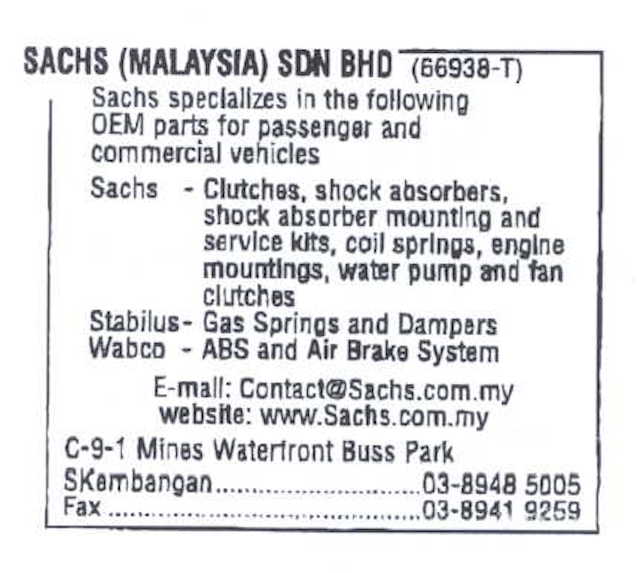
Started developing the first advertising campaigns with a very lean budget
After I joined the company I built up a marketing team and a network of designing agencies in each market. I was also in frequent contact with our German headquarters and they helped us greatly to get up and get going.
One of the areas that we greatly benefitted from our headquarters was in understanding and learning about the company’s global advertising objectives and strategies. Additionally they shared with, us without cost, their advertising images and copies which greatly reduced our own advertising costs and efforts.
In time, after long discussions and alignments with our German headquarters, our own local managements and agencies, I decided to keep our advertising budget lean and to only use it for special purposes and also with high expectations for bottom-line results.
This was mainly because I was an advocate of building lasting brands using public relations instead of advertising. Therefore I wanted to reserve the resources and energies to build a public relations machinery in our company at a later time.
These were the key considerations that shaped our initial advertising ideas:
- Newspaper advertisements. Ongoing newspaper advertisements were too expensive and there was a lot of wastage in it. I moved away from them unless they were for copyright infringement notices as required by law.
- Television and radio commercials. There were no television or radio commercials from competitors at that time. Also the costs were too high to support a spare parts business in South East Asia. So we excluded these media channels except for once when we played a radio jingle before the road traffic update in Kuala Lumpur to support a sales promotion.
- Internet advertisements. There were very little internet advertisements at that time.
- Yellow Pages. We still continued the famous Yellow Pages advertisements as some part of the trade was still reliant on it but we spent less on it.
- Automotive magazines. The bulk of our advertising campaigns were focused on the region’s automotive magazines. We negotiated the best pricing packages possible with bulk booking.
- Outdoor advertising. We also increased our spendings in this area especially for customers’ signboards and billboards located in the spare parts industrial areas in different markets.
Key strategies used for print advertising campaigns
There were basically three types of advertising strategies that we used for our advertising campaigns. The first strategy is that we used advertising to raise ur company and our brands’ awareness in key markets. Secondly we leveraged advertising to support sales and marketing promotional campaigns. Thirdly we supported out customers’ advertising campaigns.
1: Strategic brand awareness advertising campaigns
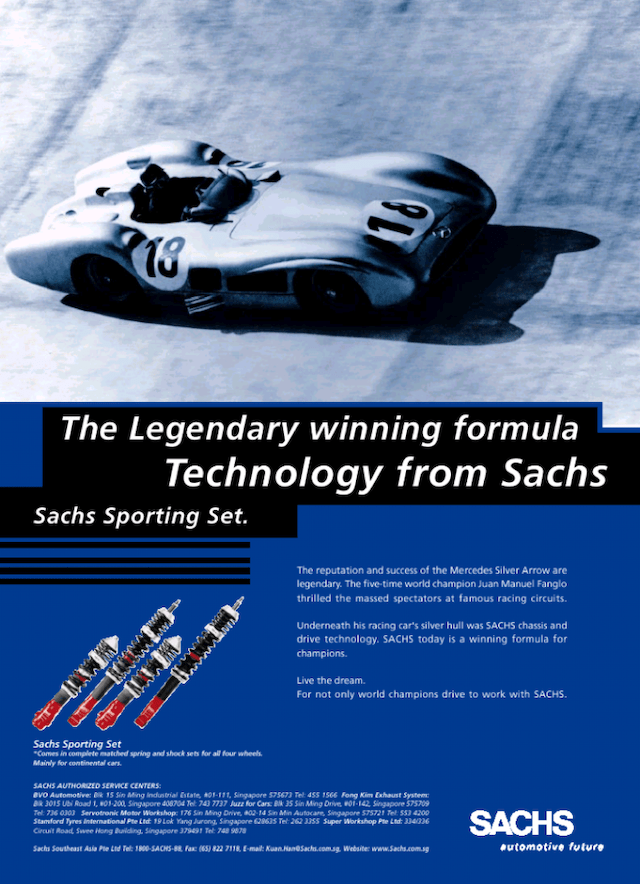
Our key brand Sachs’ products were used in many of the world’s motorsports events such as F1, Formula BMW Championships, Porsche Carrera Cup, 24 Hours Le Mans, World Rally Championships, V8 Supercars, truck racing and countless other smaller league racing tournaments. Based on these motorsports sponsorship agreements made by our headquarters, we had exclusive rights to use the sporting images, statements and claims for our advertising needs.
In a world that was still competing on prices and still using old-fashioned branding positions such as “German quality”, “OEM quality”, “Safety”, “Precision Engineering” etc, I thought leveraging motorsports as a branding platform was a breadth of fresh air. I loved the concept and immediately seized the opportunities to initiate a strategic branding advertising campaign in the major automotive magazines in key markets using a series of motorsports copies as follows:
Primary Theme: “Motorsports”
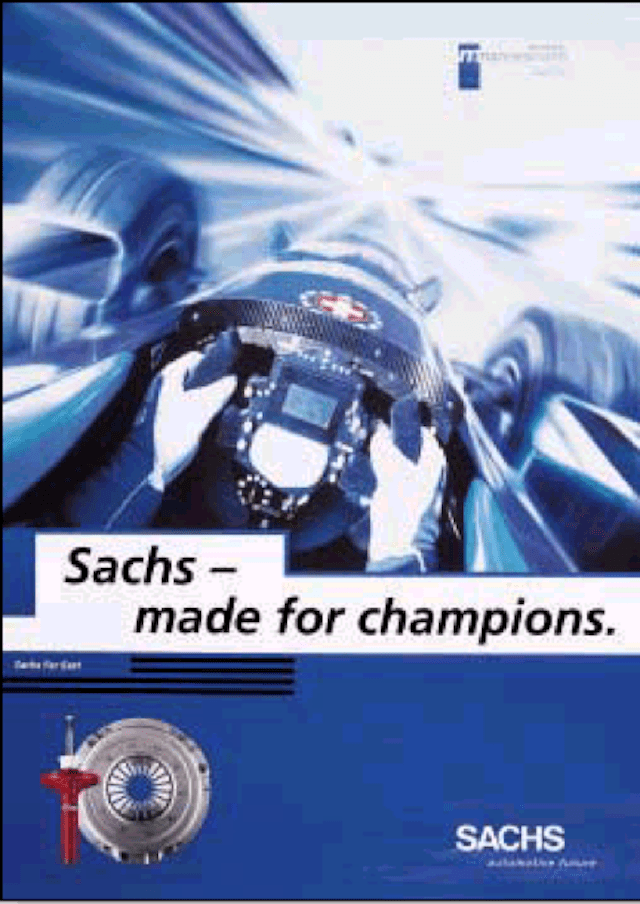
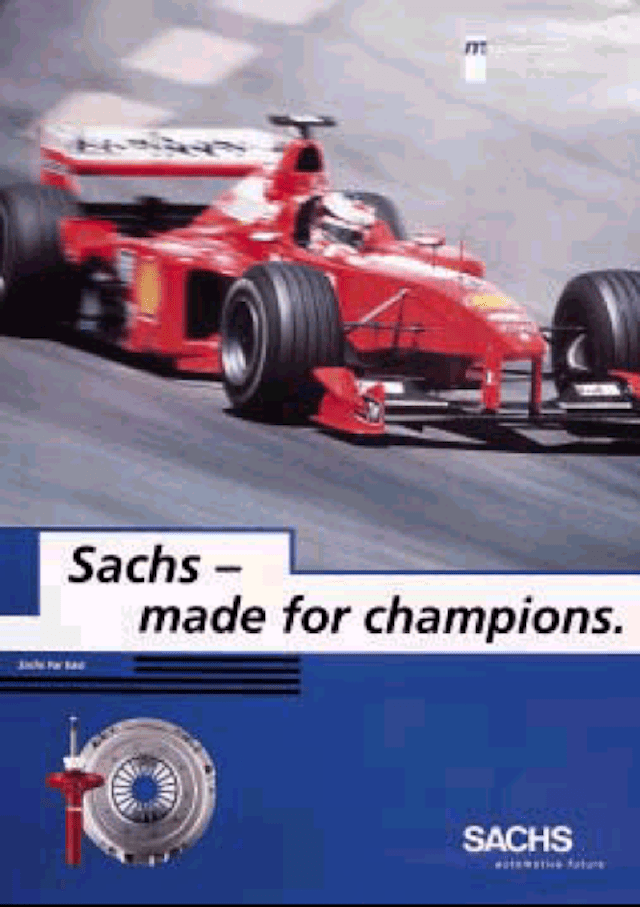

Secondary Themes

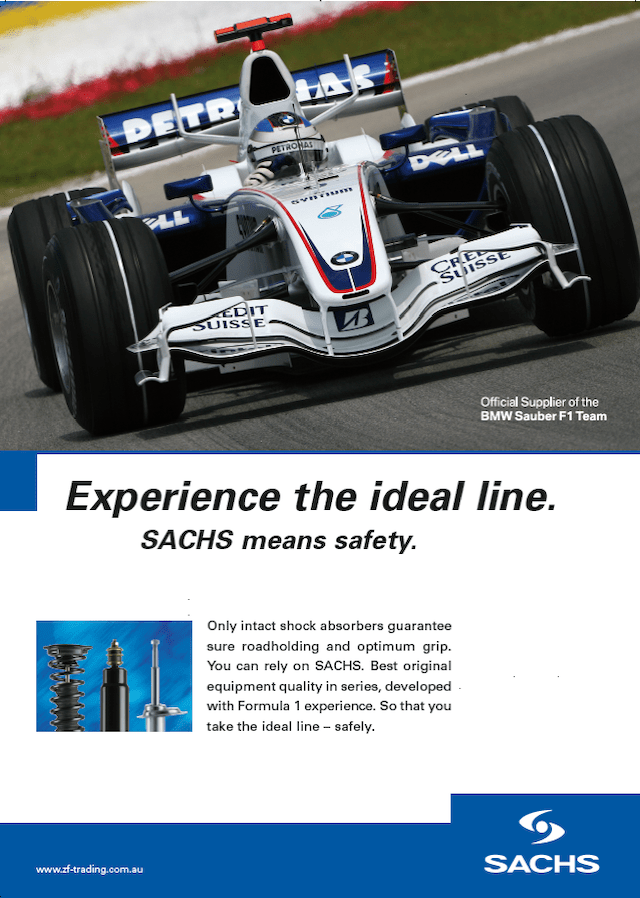

2: Tactical advertising campaigns to support sales and marketing promotional campaigns
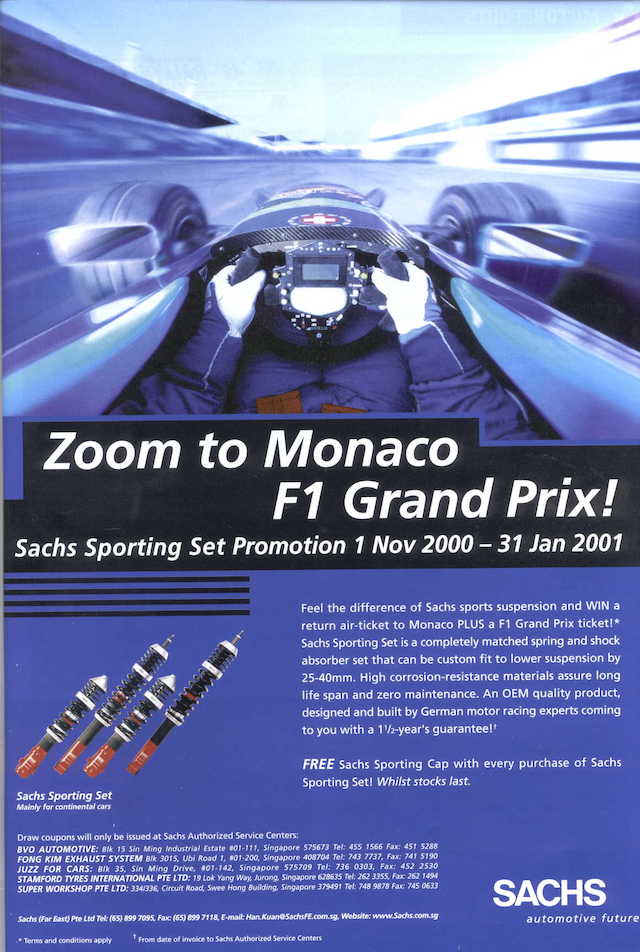
We tried to channel more of our resources towards advertising campaigns to support sales and marketing campaigns as it was easier to track the effectiveness of the campaign. Also because there was always more money on the table for such tactical campaigns as costs were shared between the different company functions and also with customers.
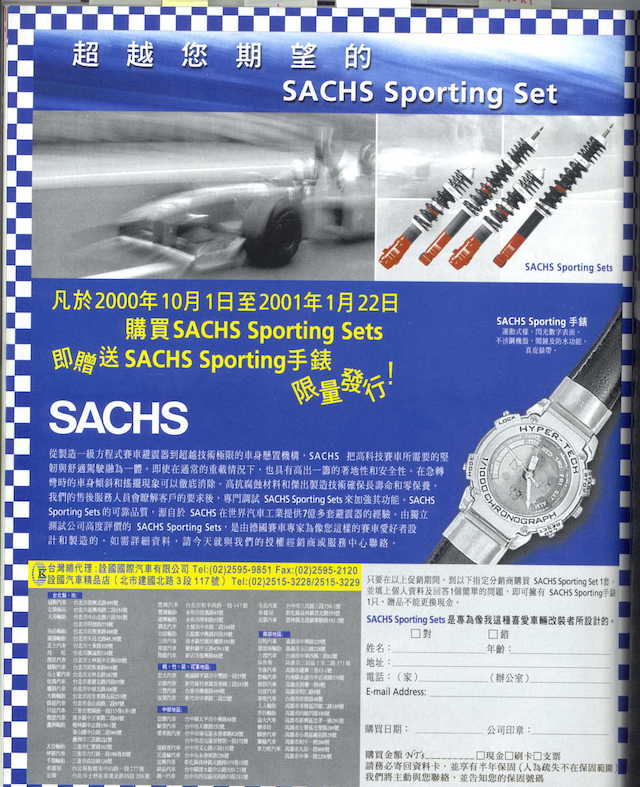
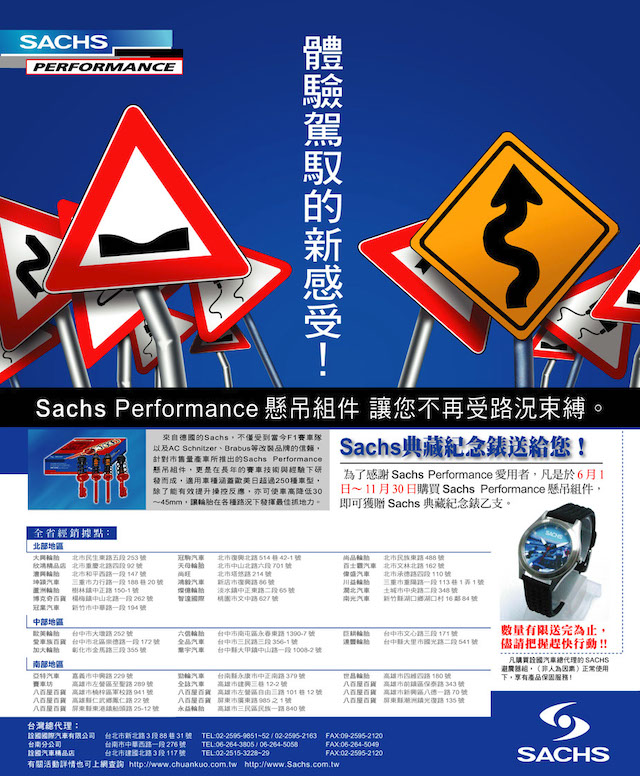
In most cases the advertisements offered a call-for-action to purchase our Sachs Performance range of products in exchange for special gifts and lucky draws to watch the Monaco F1 Grand Prix in France.

3: Sponsorship for customers’ own advertisements
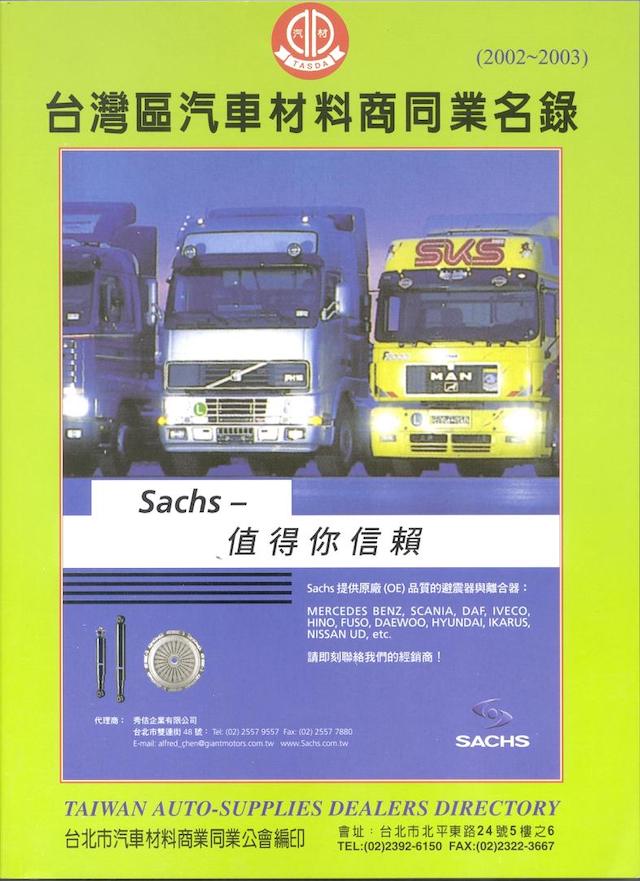
The last category of advertising costs were mainly classified as customer support costs. These were often the customer’s own advertising proposals which were partially sponsored by us in a limited way.
Additional advertising considerations
In addition to the three categories of advertising campaigns as described above, we also managed a multi-brand and multi-product approach whose spendings was often influenced by the company’s product portfolio strategies.
For example a larger portion of the advertising budget was devoted to the Sachs brand compared to the Boge brand as there was a global strategy to let the the Boge brand die a natural death, at least in some markets. Within the Sachs brand, a higher percentage of the advertising budget was dedicated to the performance range of the products compared to the standard or the commercial range. This was because the Sachs performance range of products offered the highest profit margins and also had a very appealing advertising theme focusing on motorsports which was load, colourful and emotional. And it also often had a spill-over effect for the other product ranges of the Sachs brand. Her are some examples:
Multi brand advertisements
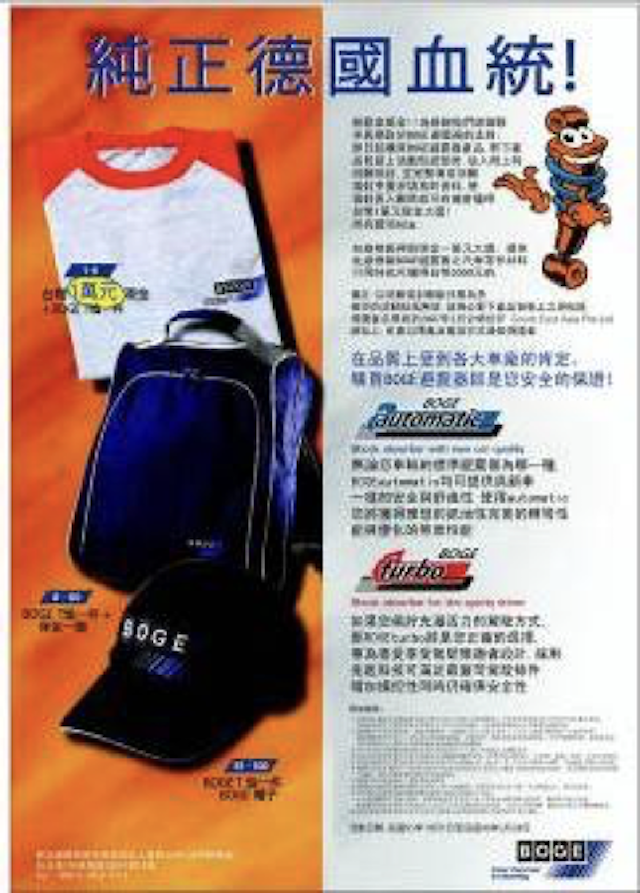
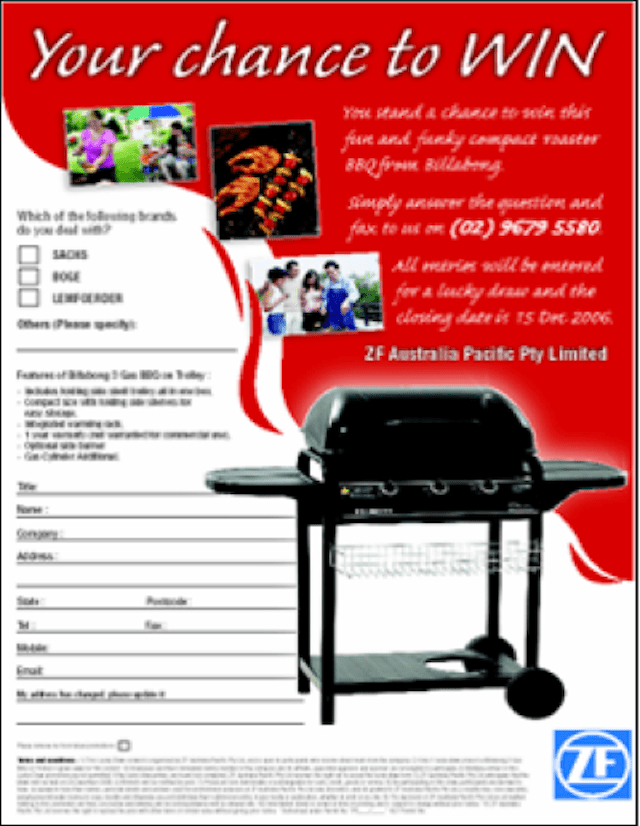
Multi product advertisements

Localising the advertisements
Normally the advertising templates that we received from our German headquarters were always complete with images and copies ready to be used. However they were based on Germany’s market needs and cultural aspects. We always had to have a discussion locally if the advertising copy needed an adoption or localisation before we can use it for our local markets. Normally the local colleagues and local customers in each market always acted as good reality checks. Here are two good examples.
Example 1 – Truck racing was not popular in the Asia Pacific region
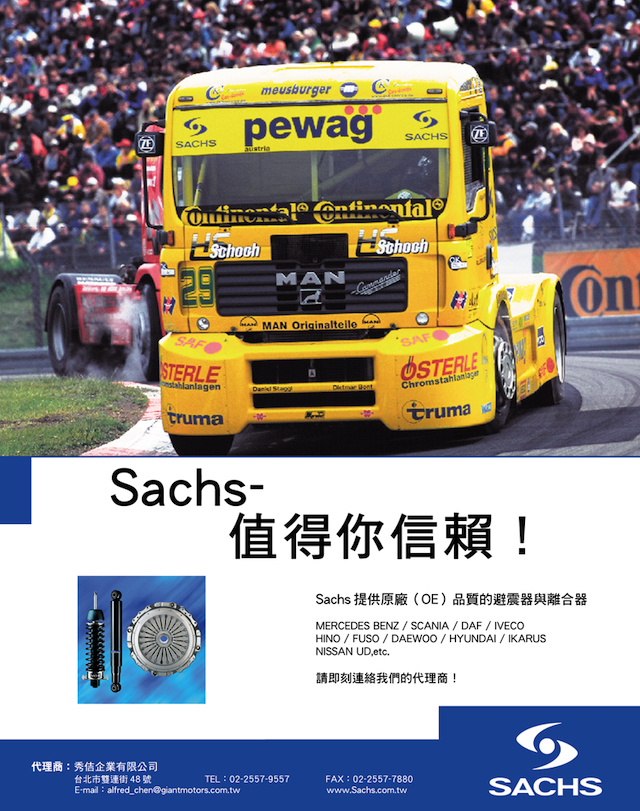
Professional truck racing was a popular motorsports in Europe and was often used for Sachs branding advertisements. Our company sponsored the racing products for some of the truck racing teams, had access to advertising rights and even had highly visible logo placements on the trucks (top left and right of the windscreen on the truck below).
However, there were no truck racing events in Asia and therefore it did not make sense to use such an advertising theme which cannot connect with the local target audience and therefore we did not use them in the Asia Pacific region. However, there was an exception: one of our customers in Taiwan was feeling adventurous and wanted to use the truck racing theme and we agreed to the idea only once.

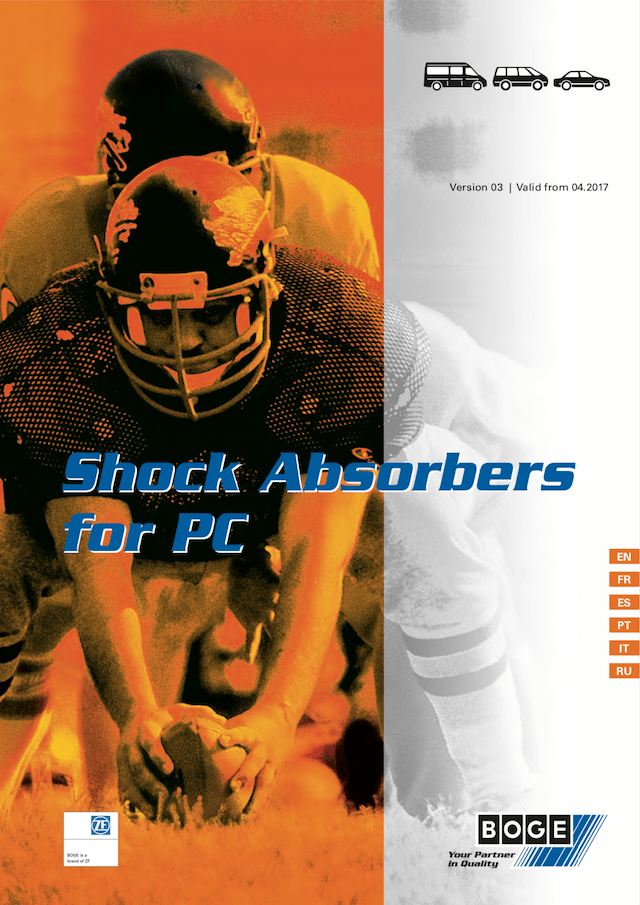
Example 2 – Selecting badminton imagery over American football for Indonesian market
Football was popular in the Unites States and was often used for Boge brand’s advertising campaigns there and was adopted by our German headquarters for the global campaigns. One of our key Boge brand markets in the region was Indonesia and we were planning to launch a Boge advertising campaign there. However we organised local advertising copy tests and the local colleagues and customers felt that an American football image would not resonate with the Indonesian target audience because the sports was not played in the country. After further brainstorming discussions, badminton was identified as a suitable imagery for the Boge advertising campaigns in Indonesia as the country produced many world badminton champions and badminton was a very popular grass roots sports in Indonesia that connected with many.


 raavenan.com